

McDonald: Carey stumping Rohit on the first morning of the Indore Test “gave us control”

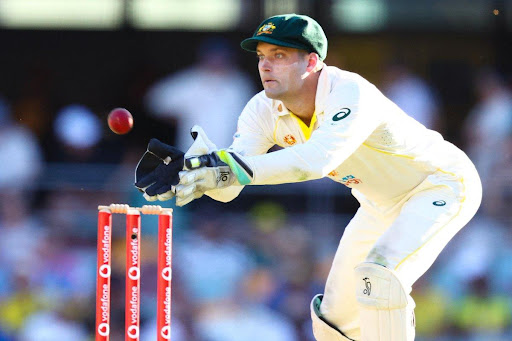
A core group of players knows what it takes to compete in the subcontinent, according to Australia head coach Andrew McDonald.
McDonald said “one hour of chaos” in Delhi cost Australia the Border-Gavaskar Trophy. With a lengthy break before the third Test to rest and regroup, they beat India on a pitch rated “poor” by the ICC, earning one of their greatest overseas victories.
Australia now has the opportunity to level the series in Ahmedabad after securing their spot in the World Test Championship final in a run that also featured Test victories in Pakistan and Sri Lanka.
They won’t visit Sri Lanka until 2025, but they will return to India for another Test series in 2027. Senior players like Travis Head, Cameron Green, Marnus Labuschagne, and Todd Murphy have numerous subcontinent tours ahead of them.
“Usman Khawaja’s performances here are probably tied back to his first experience in the subcontinent, Steve Smith as well,”
McDonald said
“Everyone’s journey starts at some point in time on the subcontinent, and I think there’s a core group of players that will come back here more experienced and, in theory, better equipped for the challenges.”
We’re talking about a series here where we’ve had certain conditions that probably aren’t relatable to any other subcontinent tour over time, so it’s always a different challenge when you do arrive here.”
On the second day at Indore, Australia went 6 for 11, missing an opportunity to take a commanding lead. Nathan Lyon‘s eight wickets helped them keep the pressure on India, making a target of 76 seem easier than it was.
“You have almost got to be near perfect against India in India. I think this game besides that 6 for 11 was near perfect,” McDonald said. “We had a little bit of luck. Marnus getting bowled off a no-ball, how critical was that at that point in time, and that allowed a partnership to flourish.”
“We took our opportunities as well. Usman’s flying catch and then Smudge Smith winding back the clock with that one at leg slip. You compare that to the Delhi game where Smudge dropped one at first slip and then we dropped one at leg slip in Matthew Renshaw, and they were critical.”
“We had one hour of chaos there and that cost us that Test match when we’d played pretty good cricket. We came here and doubled down on what we’d set out to achieve at the start of the tour.
“So on the back of Delhi, it was ‘how clear are we going to be in what we need to do next’. Is this team good enough? Yes. What do we need to do next? We’d lost 6 for 11, nothing we can do about that.”
“We go out there and Nathan Lyon as the experienced spinner delivers one of his best performances. It always takes an individual to do something special to get the team back on track, no doubt about that.”
In addition to Lyon, Matt Kuhnemann, Khawaja, and Head’s attention-grabbing efforts, McDonald picked out Alex Carey for appreciation for his outstanding wicketkeeping on the tricky surface.
McDonald considered his stumping of Rohit Sharma, the opening wicket of the Test, to be a crucial moment. He only allowed three byes for the entire game when some deliveries soared while others scuttled.
“One part that hasn’t been spoken about enough is Alex Carey’s keeping,”
he said.
“I think that on day one, that ball to Sharma, that high take, that stumping, if he doesn’t execute that Sharma gets a look at the wicket, he plays differently and the game rolls in a different direction.
“I think sometimes we are quick to criticize wicketkeepers. In this instance, I thought that day one was an absolute clinic and gave us control of the game. We saw KS Bharat miss a couple of half-chances, or get his leg in the way of balls that could have gone to first slip. So I thought that was a key moment in the game.”
However, he did acknowledge that the circumstances had been “severe.” McDonald remained diplomatic regarding the Indore pitch, adding that all the players could do was execute on whatever surface they were given. Nonetheless, similar to Pune in 2017, it probably helped the teams’ advantage decrease.
“I think you can see that in the fact that all three games have been won against the toss, teams batting first have lost, and that’s rare,” he said. “It’s usually pretty hard to win against the toss but here we’ve seen three matches go that way. I think the more extreme the conditions, the less the toss is relevant.”
Before the third Test, Rohit had said that if India had qualified for the WTC final, they might request a green pitch in Ahmedabad.
Now, they still need to win in order to guarantee that they will play Australia at The Oval, even if the outcome won’t matter if Sri Lanka loses to New Zealand in the parallel Test being played in Christchurch. McDonald nevertheless thought that the series’ pressure had changed.
“I don’t think we know what we’re going to get in Ahmedabad, I don’t think anyone does,” he said with a hint of a smile. “But we’ve definitely put some pressure into that change room. Full credit to the guys. It’s a great reward for a group that over the past couple of weeks have had their challenges.”