

Football World Cup 2026: Latest Matches and Expectations
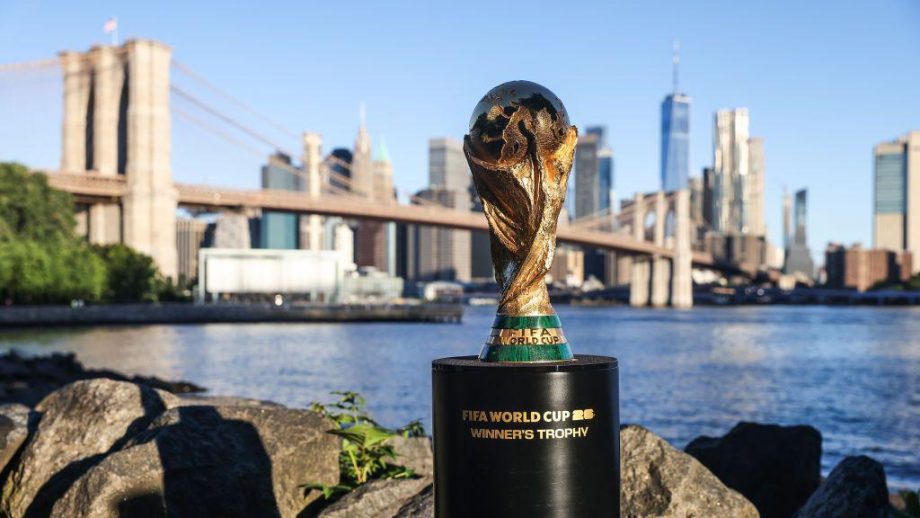
The global football community has entered an active phase of preparation for the 2026 World Cup. Expectations surrounding this year’s tournament have reached an all-time high due to the new expansion format featuring 48 nations. Marketing strategies of major brands and expert forecasts focus not only on team lineups but also on individual player storylines. Main attention is locked on the potentially final World Cup appearances of Cristiano Ronaldo and Lionel Messi, as well as the tournament debut of Norway’s star forward, Erling Haaland, on such a massive stage.
The current edition of the World Cup in the USA, Canada, and Mexico is accompanied by immense media pressure and the involvement of past legends. Legendary Spanish goalkeeper Iker Casillas has become the ambassador for a massive analytical campaign ahead of the tournament, joining a star-studded expert team alongside Sergio Agüero and Patrice Evra. Observers highlight the uniqueness of this World Cup, as it targets a new generation of fans (Gen Z), who focus more on highlights and individual player personalities than on classic club rivalries.
Meanwhile, on the European stage, the biggest football news of the summer was the appointment of José Mourinho as the head coach of Real Madrid. At the same time, Barcelona officially announced a contract extension with Hansi Flick until 2028, completely altering the balance of power ahead of the new club season.
Amid international expectations, domestic European leagues are showcasing uncompromising tactical battles. In the English Premier League, a fierce clash took place between Ange Postecoglou’s Tottenham and Daniel Farke’s newly promoted Leeds United. The match at Elland Road ended in a high-scoring 2-2 draw. Leeds capitalized on their home-field advantage, with attack leader Crysencio Summerville consistently causing trouble for Spurs defender Cristian Romero. On the other side, Son Heung-min, supported by James Maddison, once again proved his world-class status, rescuing the London side from defeat.
Other matches of the Premier League fixtures proved just as thrilling. Manchester City reasserted their home dominance, defeating Wolverhampton thanks to an intense second-half press, a period where City traditionally score over 20% of their goals. Meanwhile, Everton managed to secure crucial points in a home fixture against Brentford, taking advantage of the Bees’ poor away form and their tactical errors when defending set-pieces.
At the same time, the football season is in full swing across the ocean. In the American MLS, Minnesota United and D.C. United delivered a tense showdown. Minnesota, who had previously thrashed the capital club 4-0, once again showed superior clinical execution, even though D.C. United put up an aggressive fight backed by high possession and swift wing interceptions.
Leading up to this point, international and club football went through a series of tectonic shifts and dramatic standoffs. While national teams fought for their spots in the expanded 2026 World Cup through grueling qualification rounds, FIFA approved a record increase in financial distribution for all 48 participating associations, allowing less prominent nations to significantly improve their preparation quality.
In a historical context, the upcoming tournament is set to challenge the current world leaders. Argentina enters the World Cup as the reigning champion, having won the previous 2022 World Cup in Qatar under Lionel Scaloni in a highly dramatic final against France. Before that, European teams ruled global football: France claimed gold in 2018 by defeating Croatia in the final, Germany triumphed in 2014 after a narrow victory over Argentina in Brazil, and Spain captured its historic first title in 2010. Expanding the tournament to 48 teams in 2026 threatens the long-standing dominance of traditional heavyweights and paves the way for historic upsets.